
What Is an Aluminum Magnesium Alloy Suitcase?
An Aluminum-Magnesium Alloy Suitcase combines a lightweight aluminum base with magnesium to improve stiffness, handling, and structural resilience. Its hard shell feels cool and solid, while reinforced corners help protect contents from repeated impacts. The frame may resist bending better than many thin plastic cases. It is not indestructible.
Market evidence shows why this design attracts attention. Fortune Business Insights valued the global luggage market at approximately USD 22.37 billion in 2023, forecasting strong growth through 2030. Grand View Research reported a slightly different 2023 estimate, near USD 22.67 billion. The difference matters. Market definitions and research methods vary, so readers should not treat one forecast as absolute. The reports still indicate rising demand for durable, premium travel products.
Materials expertise adds useful perspective. Heidi Brock, president and chief executive of the Aluminum Association, has said, “Aluminum is infinitely recyclable and can be recycled over and over again.” That statement supports aluminum’s sustainability potential, but suitcase performance depends on more than recyclability. Alloy grade, panel thickness, rivet quality, wheel design, and surface treatment all influence real-world durability. A poorly engineered case can still dent, scrape, or develop loose hardware.
This guide explains what an Aluminum-Magnesium Alloy Suitcase is, how its alloy construction works, and where its strengths become practical. It also considers weight, security features, maintenance, airline handling, and long-term value. The material sounds advanced. The details decide whether it truly performs.
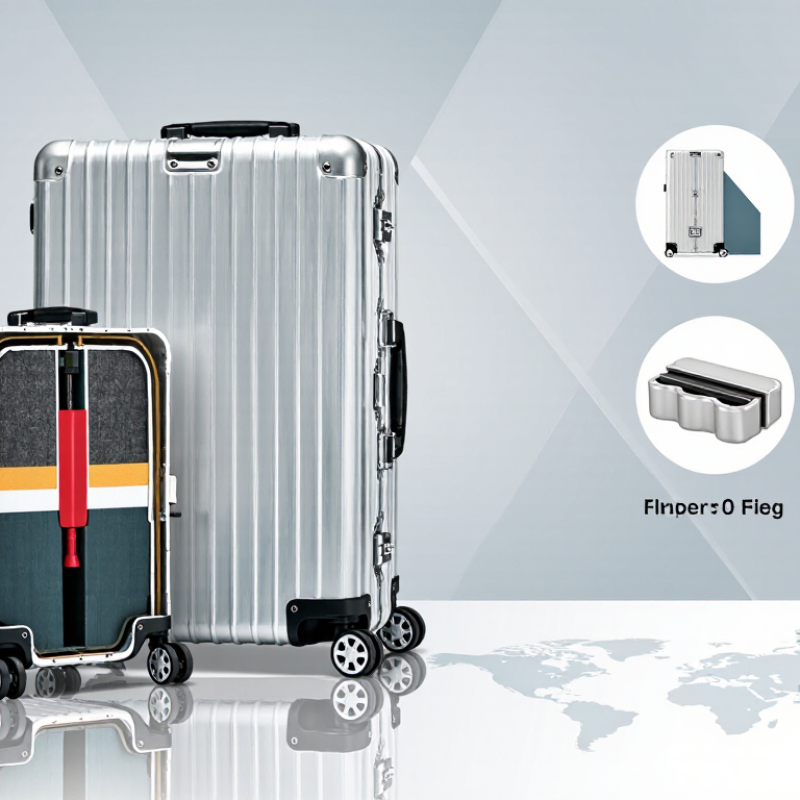
Definition and Composition of an Aluminum Magnesium Alloy Suitcase
What Is an Aluminum Magnesium Alloy Suitcase?
Definition and Composition of an Aluminum Magnesium Alloy Suitcase
An aluminum magnesium alloy suitcase has a hard shell made from aluminum blended with magnesium. It is not pure aluminum. Magnesium improves strength without adding much weight. This combination can create a rigid shell that resists dents better than many plastic cases.
The exact composition depends on the alloy grade and manufacturing process. Some materials may also contain silicon, manganese, copper, or zinc in controlled amounts. These elements influence hardness, flexibility, corrosion resistance, and production cost. Therefore, “aluminum magnesium alloy” describes a material family, not one fixed formula. A reliable specification should identify the alloy grade or provide a detailed material sheet.
During production, sheets may be pressed into shaped panels, then attached to an aluminum frame. The shell often feels cool and firm when touched. Its metallic surface can show fine scratches after airport handling, even when the structure remains sound. Magnesium can support a lighter design, but it does not make the suitcase damage-proof. That assumption needs checking.
In practical use, travelers may notice better shell stability around corners and near the handle mounts. However, hinges, locks, wheels, and frame joints also affect durability. A strong alloy cannot compensate for weak hardware. I would compare thickness, interior reinforcement, corrosion treatment, and repair options before judging the suitcase by its metal name alone. Composition matters. So does construction.
Key Properties of Aluminum Magnesium Alloy
What Is an Aluminum Magnesium Alloy Suitcase?
Aluminum magnesium alloy combines aluminum’s low density with magnesium’s strengthening effect. Common 5xxx-series alloys contain roughly 2% to 5% magnesium. The Aluminum Association identifies these alloys as strong, corrosion-resistant, and suitable for forming. Their density remains close to 2.66–2.70 g/cm³, according to engineering reference data from ASM International. This helps create a rigid suitcase without making it excessively heavy.
The alloy resists dents better than many ordinary plastics. Its metal shell also keeps its shape around packed clothing, shoes, and electronic equipment. Magnesium improves strength, while aluminum supports corrosion resistance through a protective oxide layer. Still, protection is not absolute. Scratches, saltwater, and poor surface treatment can accelerate visible damage. A suitcase used near beaches needs more care than product advertisements often suggest.
Recyclability is another practical property. The International Aluminium Institute reports that recycling aluminum requires about 5% of the energy used for primary production. That figure supports the material’s long service potential, although recycling depends on collection systems and alloy separation.
In daily use, wheel mounts, hinges, and corner structures may fail before the shell does. A strong shell alone cannot guarantee durability. This is where design testing matters, and some luggage assessments still understate repeated impact, rough handling, and uneven loading.
Suitcase Structure and Manufacturing Process
An aluminum magnesium alloy suitcase uses shaped metal shells instead of fabric panels. Its structure begins with two curved shells, usually formed from thin alloy sheets. Aluminum keeps the case light, while magnesium can improve stiffness and impact resistance. The exact performance depends on alloy grade, thickness, and heat treatment.
A reinforced frame joins the shells around the opening. This frame helps maintain alignment and carries pressure from the hinges and latches. Corner guards protect high-contact areas. Rivets, screws, or controlled welding connect the frame and internal brackets. Inside, a lining, divider panel, and compression straps organize clothing without hiding the structural joints. Wheels and a telescopic handle attach to reinforced mounting points, not only to the outer shell.
Manufacturing starts with sheet inspection and precise cutting. Forming dies then press each panel into its curved shape. Workers or automated tools trim the edges and drill attachment holes. The parts may receive anodizing or a protective coating before assembly. Every finished case should undergo checks for shell thickness, frame alignment, wheel movement, handle load, and latch operation. Small misalignments can appear after forming. They are easy to overlook, yet they may create noise or uneven sealing. A careful inspection catches these weaknesses before regular travel exposes them. The process is highly controlled, but no metal shell is perfectly immune to dents.
Advantages and Limitations of the Alloy Design
What Is an Aluminum Magnesium Alloy Suitcase?
An aluminum magnesium alloy suitcase uses a lightweight metal blend for its shell or frame. Aluminum provides corrosion resistance and a familiar rigid structure. Magnesium can reduce weight while improving strength in suitable proportions. The final performance depends on the alloy grade, panel thickness, and manufacturing process. A well-made case should feel firm, not excessively heavy, when lifted from a car trunk.
Its main advantage is balanced protection. The shell resists crushing better than many soft cases. A metal surface also handles airport belts, rough sidewalks, and repeated packing with confidence. The material does not absorb water like fabric. Its smooth surface is easy to wipe after a rainy trip. In daily use, the strongest benefit may be stability. Clothing stays compressed when the case is fully loaded.
There are limitations. Metal can dent instead of flexing back. Scratches and corner marks may appear quickly. That character is not always attractive. Magnesium alloys can also cost more than basic plastic shells. Heat, moisture, and poor coating quality may affect surface appearance over time. Weight savings are real, but wheels, locks, frames, and reinforced corners add mass. A suitcase may still feel heavy when packed with books. Check the wheel assembly and handle carefully. The alloy is only one part of the travel experience.
Care, Maintenance, and Common Applications
What Is an Aluminum Magnesium Alloy Suitcase?
An aluminum magnesium alloy suitcase combines aluminum’s low weight with magnesium’s added stiffness. Its rigid shell resists crushing better than many soft cases. The International Air Transport Association reported 2024 passenger demand increased 10.4% from 2023. That growth supports continued demand for durable luggage in airports, business travel, and equipment transport. These suitcases also suit photographers, consultants, and travelers carrying fragile tools.
Care starts with simple habits. Wipe the shell after dusty or coastal trips. Salt residue can accelerate corrosion around seams, screws, and corner guards. Use a soft cloth, mild soap, and clean water. Avoid steel wool and strong solvents. They can scratch the finish or weaken protective coatings. Dry the case fully before storage. Leave it open briefly.
Inspect wheels, handles, locks, hinges, and rivets every few trips. A loose fastener can become a larger failure during transit. Do not force an overloaded zipper or lid. The case may look strong, but its frame still has limits. I once treated a rigid case as indestructible, which was a poor assumption. According to the International Aluminium Institute, recycling aluminum uses about 95% less energy than primary production. Repairing damaged parts may therefore support both service life and resource efficiency. Small imperfections matter. A dented corner does not always require replacement, but it deserves inspection.
What Is an Aluminum Magnesium Alloy Suitcase?
Magnesium content in selected aluminum-magnesium alloys commonly used for lightweight panels, transport equipment, marine structures, and protective cases.