China Best Luxury Backpacks for Global Buyers?

Can China produce the best Luxury Backpacks for global buyers? The answer depends on what “best” means. For one buyer, it is a finely grained leather bag with hand-finished edges. For another, it is a lightweight nylon backpack with smooth zippers and a clean silhouette. Materials, construction, design, and after-sales support all shape the final judgment.

Bernard Arnault, chairman of LVMH and a leading voice in the luxury industry, has said, “Luxury goods are the only area in which it is possible to make luxury margins.” That observation points to a key issue: a premium price alone does not prove lasting quality. Buyers should look closely at stitching, lining, hardware, material consistency, and documented quality-control processes. Small details matter.

This guide explores what global buyers should assess when comparing Chinese Luxury Backpacks with other options. It considers product development, customization, production capacity, communication, and the evidence a supplier can provide. A polished sample may look convincing under showroom lights. Yet repeated orders reveal more about consistency. That distinction is easy to overlook.

China’s manufacturing ecosystem can offer a broad range of materials and production capabilities, but suppliers differ. This article does not treat origin as a guarantee of quality. Instead, it outlines practical questions buyers can ask before making a decision. Some comparisons may remain imperfect, because brands disclose different levels of detail. That deserves scrutiny, too.
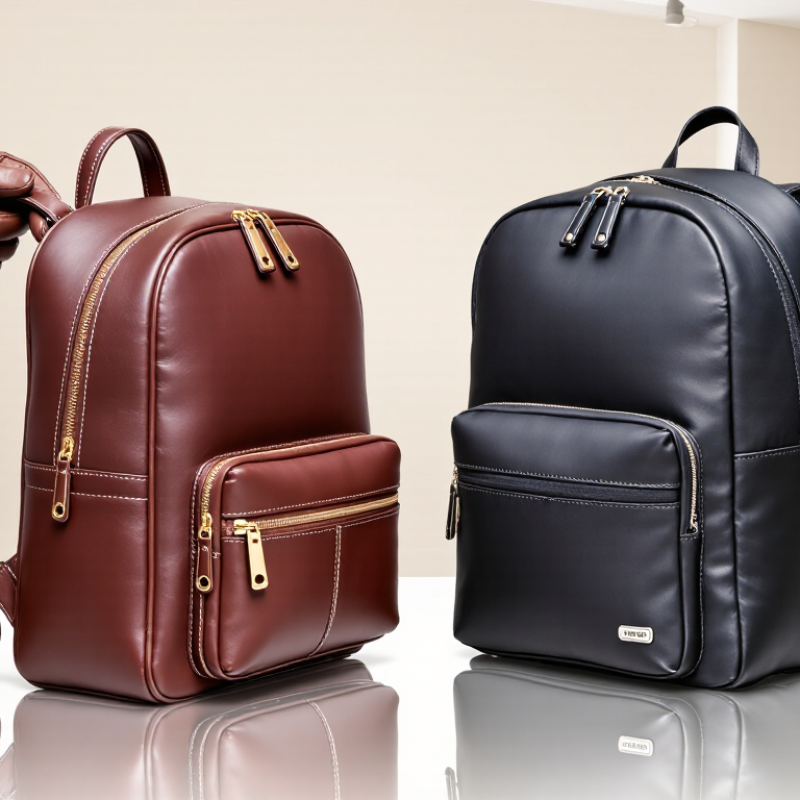
China Best Luxury Backpacks for Global Buyers?

What Defines a Luxury Backpack Made in China?

What defines a luxury backpack made in China? Not a high price or a polished logo alone. The difference appears in the materials and how carefully they are assembled. Check the fabric under bright light: its weave should look even, without thin patches or loose threads. Feel the zipper pull. It should move smoothly, even around a full corner. Details matter.

A practical inspection also looks inside. Seams should lie flat, strap edges should feel comfortable, and stress points should have neat, reinforced stitching. Try the backpack with a laptop and a water bottle; the base should stay balanced, not sag sharply. Feel the seams. Ask how materials are checked and whether production samples are inspected before bulk orders. Clear answers matter more than vague claims about craftsmanship. Manufacturing capability varies by workshop, so “made in China” alone tells you little about quality. Even a well-made bag can have compromises: a lighter lining may reduce weight but wear sooner. No single detail proves luxury. Look for consistent construction, transparent quality checks, and comfort that holds up beyond the showroom.

Materials, Craftsmanship, and Design Standards

For global buyers, a luxury backpack should earn its value through materials, construction, and daily comfort. Dense woven nylon can handle abrasion, while well-finished leather offers a different feel and develops character over time. Neither material is automatically better. Ask about fabric weight, water-resistant finishes, and color-transfer testing. In humid climates, a breathable back panel and corrosion-resistant hardware can make a practical difference. Feel the seams.

Craftsmanship is visible in details that are easy to overlook. Stitching should remain even around corners, with reinforced bartacks at shoulder-strap anchors and other stress points. Zippers should run smoothly without catching the lining. Check whether interior edges are neatly bound, and whether the handle feels secure when the bag is loaded. Small details matter. A polished sample is encouraging, but it cannot guarantee that every production batch will match.

Design standards should balance appearance with fit and function. Adjustable straps need enough range for different body types, while padded panels should distribute weight without feeling bulky. Test the backpack with a realistic load, not just an empty display sample. Check pocket access, overall dimensions, and whether common wear parts can be repaired or replaced. One honest caveat: comfort is personal, and a design that suits one traveler may not suit another.

China’s Luxury Backpacks: Comparing Common Shell Fibers

Fiber tenacity is one useful material indicator for global buyers assessing backpack fabrics. It measures fiber strength relative to linear density; it does not represent the performance of a finished bag.

Indicative midpoints of commonly reported ranges: nylon 6,6, 6–9 g/denier; high-tenacity polyester, 4–7 g/denier; cotton, 2.5–5 g/denier. Actual results vary by fiber grade, yarn, fabric construction, and test conditions. ASTM D3822/D3822M describes a method for testing single-fiber tensile properties; it does not set these material values.

For a complete quality assessment, buyers should also request fabric abrasion and colorfastness results, seam-strength testing, hardware cycle tests, and evidence of consistent stitching and finishing.

Notable Chinese Luxury Backpack Brands and Their Distinctive Features

Chinese luxury backpack makers often distinguish themselves through material contrast rather than oversized logos. Some combine pebbled leather with tightly woven technical fabric; others use restrained jacquard patterns, brushed metal hardware, and carefully divided compartments. The result can feel polished without looking formal. Look closely. Stitch spacing, zipper movement, and how a loaded bag sits against the back reveal more than a showroom photograph. For commuters, padded laptop sleeves and broad shoulder straps matter as much as the finish.

Market figures offer context, not proof of quality. Grand View Research estimated the global backpack market at USD 19.6 billion in 2023 and projected 6.2% annual growth from 2024 to 2030. Bain & Company reported that global personal luxury goods sales reached €362 billion in 2023. These broad categories do not isolate luxury backpacks, so buyers should avoid treating growth as a guarantee of demand or craftsmanship. A useful comparison checks leather consistency, lining strength, strap adjustment, and repair access. One caveat: decorative detailing can raise the price without improving daily comfort. Test the bag with a laptop and a full water bottle before judging its design.

How Global Buyers Can Compare Quality, Price, and Function

China Best Luxury Backpacks for Global Buyers?
How Global Buyers Can Compare Quality, Price, and Function

Global buyers should compare measurable features, not rely on luxury labels alone. Bain & Company and Altagamma estimated that global personal luxury goods sales reached €364 billion in 2024, down 2% at current exchange rates. This broad category is not backpack-specific, but it shows why buyers should check value carefully rather than assume premium prices guarantee lasting quality.

Inspect fabric density, seam consistency, zipper movement, and reinforcement around handles. Ask suppliers for material specifications, inspection records, and clear warranty terms. Compare usable capacity, empty weight, laptop protection, and strap comfort with a loaded sample. A smooth showroom test can miss pressure points after several hours. No comparison is perfect. Price per use can help: divide the purchase cost by realistic years of use, while accounting for repair access and replacement parts.

Tips: Request the same sample measurements and test conditions from each supplier. Pack a laptop and a few books, then walk for ten minutes. Check whether the bag tips, pulls at the shoulders, or strains at the seams. I would still leave room for judgment; comfort varies between users.

Import, Retail, and After-Sales Considerations for International Buyers

For global buyers, a luxury backpack is not just a product choice; it is a landed-cost and service decision. Before placing an order, request the packed dimensions, gross weight, material breakdown, country of origin, and a clear commercial invoice. These details help brokers assess classification and estimate duties, taxes, and freight. Bain & Company and Altagamma estimated the personal luxury goods market at about €363 billion in 2024, down roughly 2% from 2023. That softer market makes careful stock planning important. Start with a modest test order. Forecasts can be wrong.

Retailers should inspect stitching, zippers, lining, and strap anchors on arrival, then record defects with dated photographs. Ask suppliers how replacement parts are handled, who pays return freight, and how long repairs usually take. Those terms matter more than a polished product sheet. The National Retail Federation estimated that 16.9% of U.S. retail sales would be returned in 2024; this is not a backpack-specific or global rate, but it shows why return costs need a place in margin calculations. For overseas customers, publish realistic delivery windows and give simple care instructions. A loose strap after one month is a small defect, but a costly service failure. And avoid promises the local repair network cannot keep.

China Luxury Backpacks: Import, Retail, and After-Sales Considerations for Global Buyers

Use this table as a buyer-planning guide. Customs classification, duties, product rules, and warranty obligations depend on the product and destination market; confirm current requirements with the relevant customs authority or a qualified trade professional.

Decision Area Relevant Facts Buyer Checklist Commercial Implication
Product specification “Luxury” is a market-positioning term, not a universal technical grade. Material, construction, hardware, lining, stitching, and finishing should be defined in measurable specifications. Document material composition, dimensions, tolerances, color standards, component specifications, approved samples, and workmanship acceptance criteria. Clear specifications reduce sample-to-production disputes and make quality inspections more consistent.
Customs classification Backpacks are generally classified within HS heading 4202, but the precise subheading can depend on construction, outer-surface material, and the importing country’s tariff schedule. Confirm the destination-country tariff classification using the finished product’s actual materials and construction. Request a binding ruling where appropriate. Classification affects duty rates, declarations, and potentially other import requirements; do not rely solely on a supplier’s suggested code.
Import duties and taxes Import duty and import VAT or sales tax are determined by the destination market and applicable product classification. Rates and rules may change. Check the official tariff for the destination, customs value rules, tax registration requirements, and any preferential-origin conditions before setting landed-cost assumptions. A quoted factory price is not the landed cost. Include freight, insurance, customs charges, taxes, brokerage, and local delivery in the margin model.
Export documentation Commercial shipments commonly require documents such as a commercial invoice, packing list, transport document, and origin information. Additional documents depend on the shipment and destination. Agree who prepares each document, ensure product descriptions and values are consistent, and confirm any destination-specific certificates or declarations before dispatch. Document inconsistencies can cause customs queries, delays, storage costs, or amendments to import declarations.
Incoterms and freight Incoterms define specified responsibilities, costs, and transfer of risk between seller and buyer. They do not by themselves determine ownership or settle every payment term. State the chosen Incoterms rule and named place in the purchase contract. Separately confirm cargo insurance, importer-of-record responsibility, and delivery milestones. Comparing supplier quotations is meaningful only when the delivery scope and risk allocation are clear.
Material and chemical compliance Markets can restrict certain chemicals in consumer products. In the EU, for example, REACH restrictions may apply to substances in materials and components; applicable requirements depend on the product and substance. Identify the destination-market rules and request relevant material declarations or test reports. Test representative components and colors where risk assessment indicates. Compliance checks can affect material selection, production approval, and whether products may be placed on a market.
Consumer-product obligations Product-safety, traceability, labeling, and responsible-economic-operator requirements vary by market. The EU General Product Safety Regulation has applied since 13 December 2024 to products within its scope. Review rules for the specific sales market, including required product or packaging information, traceability records, online-listing information, and any local representative obligations. Compliance planning should be completed before launch, not after inventory has arrived or online listings are live.
Leather and protected materials Some wildlife-derived materials are subject to international trade controls under CITES and related national laws. Requirements depend on the species, product, and trade route. Obtain precise material and species information. Avoid restricted or unclear materials unless required permits and documentation are confirmed for every relevant jurisdiction. Missing permits or incorrect material declarations can lead to shipment detention, seizure, or other enforcement action.
Retail pricing and channel Retail economics vary by market, channel, taxes, returns, fulfillment costs, and promotional policy. There is no universal retail markup that applies to every backpack. Model landed cost alongside marketplace or retailer fees, payment costs, local fulfillment, returns, customer service, and tax treatment. Set pricing by market and channel. Channel-specific cost modeling helps prevent a nominally attractive purchase price from producing an unsustainable retail margin.
Quality assurance Pre-shipment inspection can check quantity, workmanship, dimensions, materials, packaging, and agreed tests. Inspection results reflect the sample and criteria used. Approve a sealed reference sample, use written acceptance criteria, set inspection timing, and define how defects or rework are handled in the contract. Inspection and clear remedies reduce the risk of receiving goods that differ from the approved sample or written specification.
After-sales and warranty Warranty terms and statutory consumer rights differ by country. A supplier warranty does not automatically replace obligations a retailer or importer may have to consumers. Set a written process for claims, repair, replacement, spare parts, shipping costs, response times, and evidence required. Check local consumer-law obligations. Budget for returns and repairs, and ensure the buyer-facing policy is consistent with supplier support and local law.
Supplier due diligence Manufacturing capability, subcontracting, quality systems, and export experience should be verified rather than inferred from product images or online listings. Verify the contracting entity, production location, relevant licenses, references, sample consistency, subcontracting arrangements, and payment details independently. Due diligence can reduce payment, production, intellectual-property, and delivery risks before a large order is placed.